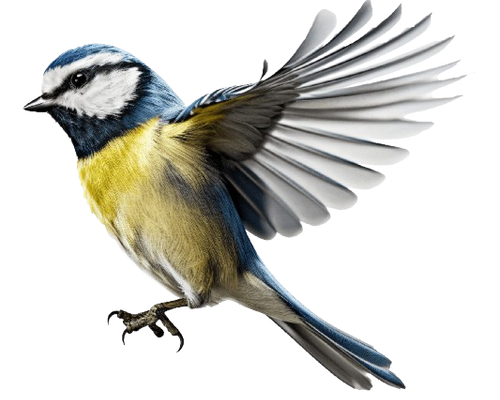
Match the feeder style to the species first, then worry about seed. Tube feeders with small ports draw finches, chickadees, and nuthatches. Hopper and platform feeders with wider trays and sturdier perches suit cardinals, blue jays, and larger mixed-flock visitors. Suet feeders bring in woodpeckers and other bark-foraging birds. A window-mounted feeder can put any of these species within arm's reach for close viewing. Picking by target bird narrows the choice faster than picking by feeder shape or price alone.
Why Does Feeder Design Determine Which Birds Show Up?
A feeder's port size and perch design work like a size filter. Finches have small, narrow bills built for extracting seed through tight openings, so a feeder with narrow ports and short perches lets them feed while excluding larger birds that can't fit. Cardinals and jays need a wider tray and a perch that can bear their weight, which is why a hopper or platform design with more open access suits them instead. Suet feeders skip perches altogether in favour of a wire cage, matching birds like woodpeckers and nuthatches that grip and peck rather than perch and feed.
What Feeder Attracts Cardinals and Blue Jays?
Cardinals and jays need room to perch and feed comfortably, which rules out narrow tube designs built for smaller birds. A hopper feeder with a wide tray and generous perches, stocked with black oil sunflower seed or a safflower mix, gives both species (plus chickadees and nuthatches sharing the same tray) enough space to feed without crowding each other out.
What Feeder Attracts Finches and Chickadees?
Finches feed almost entirely from small, narrow ports, so a full-size hopper feeder is more seed than they can use efficiently. A squirrel-proof finch feeder filled with nyjer seed is built around this: the narrow mesh or ports match a finch's small bill, and a weight-activated perch closes off access for squirrels and larger birds that would otherwise empty it in a day.
How Do I Attract Woodpeckers and Nuthatches?
Woodpeckers, nuthatches, and chickadees all forage on tree bark, which is why suet works so well for them. A suet feeder holds compressed fat cakes in a cage the birds cling to and peck through; smaller species like downy woodpeckers, chickadees, and nuthatches use the smaller feeding ports, while larger woodpeckers like hairy or red-bellied use the wider openings on the same feeder.
Can I Watch Birds Up Close from Indoors?
A window feeder mounts to glass with suction cups, putting whichever species is already visiting the yard just inches from the window. The same window feeder holds about half a pound of seed, suet, or mealworms, enough for regular refills without sitting empty between visits, and works with any of the seed types above rather than favouring one species.
Do I Need More Than One Feeder?
Yes, if the goal is seeing a range of species rather than just whichever bird happens to dominate one feeder. A squirrel-proof finch feeder for finches, a hopper feeder for cardinals and jays, and a suet feeder for woodpeckers can run at the same time in the same yard, spaced a few metres apart so the larger birds at the hopper feeder don't crowd out the smaller ones at the tube feeder. Running one feeder of each type is a more reliable way to diversify visitors than switching seed in a single all-purpose feeder.
Frequently Asked Questions
What's the typical price range for a bird feeder?
$35 to $126 CAD, depending on feeder type and squirrel-resistance features. A basic window feeder sits at the lower end of that range, while a squirrel-proof suet feeder runs closer to the top.
Does an order qualify for free shipping?
Yes, on most Canadian orders over $125. Orders under that threshold are charged standard shipping rates at checkout.
Are these feeders durable enough for outdoor use through Canadian winters?
Yes, for feeders built with weatherproof metal hardware. The hopper feeder referenced above, for example, is made of zinc-plated metal specifically for rust protection, which holds up through repeated freeze-thaw cycles.