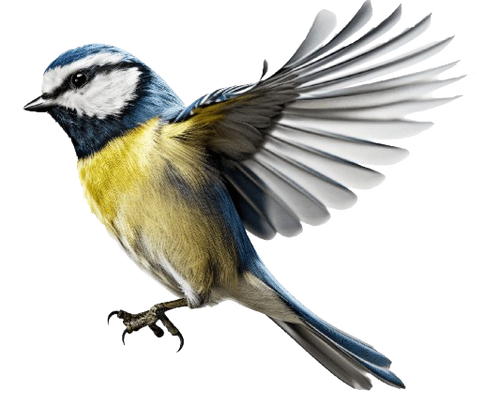
Most common backyard birds have an average wild lifespan of only two to five years, far shorter than their maximum possible lifespan, since mortality is highest in a bird's first year and pulls the average down well below what a bird that survives to adulthood might actually reach.
What's the Average Lifespan of Common Backyard Birds?
Small songbirds like chickadees, sparrows, and finches typically average two to five years in the wild, largely because of how risky the first year of life is: predation, weather, and food scarcity all take a heavy toll on young, inexperienced birds before they ever reach breeding age.
Why Is Average Lifespan So Much Lower Than Maximum Lifespan?
Average lifespan is pulled down by how many birds die young, not by how long an individual bird is capable of living. A species' average might be two to three years, while banding records have documented individual birds of the same species living a decade or more once they make it past that high-risk first year, a pattern common across most wild songbird populations.
Which Common Backyard Birds Live the Longest?
Some backyard regulars live notably longer than the typical songbird average. Banding records have documented individual chickadees and nuthatches living well past a decade, and some larger backyard visitors, like certain woodpecker and jay species, have recorded lifespans into their teens or longer when a bird avoids the usual hazards.
How Can You Learn More About a Species You're Watching?
A field guide is the most practical starting point for learning a specific species' typical lifespan, range, and behaviour. Birds of Ontario, priced at $29.95, covers 318 Ontario bird species with range maps and detailed species accounts covering size, habitat, nesting, feeding, and voice.
Frequently Asked Questions
Do birds at a feeder tend to live longer than birds that don't visit feeders?
This specific comparison isn't something this piece can confirm as an established fact; what's well documented is that reliable access to food, which feeding can provide, generally supports better body condition through difficult seasons like winter.
Do migratory birds tend to have shorter lifespans than non-migratory ones?
Migration adds real risks, such as exhaustion, severe weather, and unfamiliar territory, on top of what a non-migratory bird already faces, but it isn't accurate to say migratory species are uniformly shorter-lived, since survival varies widely by species and conditions.
Is a bird's lifespan the same in the wild as in captivity?
No, generally not. Birds in captivity, without predators, severe weather exposure, or food scarcity, often live considerably longer than the same species does in the wild.
Do larger backyard birds live longer than smaller ones?
Often, yes, as a general pattern across bird species, larger species tend to have longer average and maximum lifespans than smaller songbirds, though there's variation within that pattern.
How do researchers know how long wild birds actually live?
Bird banding, where individual birds are tagged with a small identifying band and later recaptured or reported, is the main method researchers use to track how long individual wild birds actually survive.