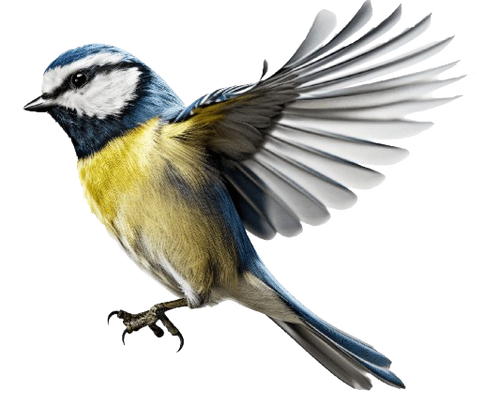
A loose pile or scatter of feathers with no body present almost always means a predator caught a bird nearby, most often a hawk, cat, or occasionally an owl. Predators that pluck their prey before eating tend to leave the downy body feathers scattered in a small area, called a "pluck site," while carrying the carcass itself off to eat somewhere quieter.
How Can I Tell What Kind of Predator Was Involved?
The feather pattern itself gives a few clues. A tight, concentrated circle of feathers with little other disturbance often points to a hawk, which typically plucks and eats at or very near the capture spot before moving on. Feathers scattered more widely, sometimes alongside drag marks or near a fence line or shrub, can suggest a cat, which is more likely to carry prey partway before abandoning or finishing it. A true kill site with blood and larger bone fragments is less common, since most feeder-area predation involves birds being carried off rather than eaten entirely in the open.
Is This a Sign Something Is Wrong With My Backyard?
No. A pluck site is a normal part of a functioning backyard ecosystem, not a sign of a problem to fix. Hawks hunting around feeders are drawn there precisely because feeders concentrate small birds in a predictable spot, the same reason the birds are there in the first place. Finding feathers occasionally means the system is working the way wild bird habitat actually works, not that the yard has become unsafe.
Should I Stop Feeding Birds If I Find Feathers Often?
Not necessarily. If predation is happening frequently enough that it's reducing how many birds visit, a few adjustments can help without giving up feeding altogether: placing feeders within about 3 meters of dense shrub cover so birds have a fast escape route, avoiding open, exposed feeder placement in the middle of a lawn, and keeping any outdoor cats indoors, since outdoor cats are responsible for a much larger share of backyard bird mortality than wild predators. Mounting the feeder on a pole fitted with a baffle such as the Squirrel Defeater Cylinder Pole Baffle also stops cats and other climbing animals from reaching the feeder itself.
What Should I Do With the Feathers I Find?
In most cases, nothing needs to be done. Feathers can simply be left to break down naturally or swept up if they're in an inconvenient spot like a patio or walkway. There's no cleanup requirement, and handling a small number of feathers with bare hands poses minimal risk, though washing your hands afterward is a reasonable precaution, as with any outdoor debris.
Frequently Asked Questions
What's the difference between a pluck site and an actual kill site?
A pluck site has feathers but little else, since the predator carried the body away to eat elsewhere. A kill site shows signs the bird was eaten on the spot, including larger feather clumps, some remains, and sometimes blood, and is reported less often around backyard feeders than pluck sites are.
Do hawks really hunt at bird feeders on purpose?
Yes. Feeders reliably attract small songbirds, which in turn attracts the hawks that hunt them, particularly Sharp-shinned Hawks and Cooper's Hawks in most of Canada. This is a natural predator-prey relationship rather than a flaw in feeder placement.
How often should I expect to find feathers if I have a busy feeder?
There's no fixed frequency. A yard with heavy bird traffic and nearby cover for hawks to perch in may see a feather pile every few weeks, while a yard with less natural cover nearby may go much longer between incidents.
Can squirrels or raccoons leave feather piles too?
It's possible but much less common, since these animals are opportunistic rather than dedicated bird hunters. Most feather piles found in daylight trace back to a hawk, and most found overnight trace back to a cat.