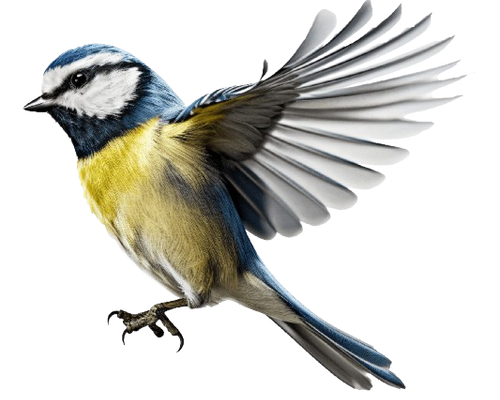
A tube feeder is generally more effective than a hopper feeder for small birds specifically, since its narrow ports and short perches favour lightweight species and make it harder for a larger bird to feed from the same spot. A hopper feeder still attracts small birds, but its open tray design is just as easy for larger species to access, so it draws a broader mix of bird sizes rather than filtering for small ones.
What Design Feature Makes a Tube Feeder Better Suited to Small Birds?
A tube feeder favours small birds mainly because of its short perches and narrow feeding ports, which give a lightweight bird enough room to grip and feed while making the same spot awkward for a larger bird to use. The Mixed Seed Tube Feeder uses four looped perches sized for smaller species rather than for a bird the size of a blue jay or grackle, while also giving a feeding bird a clear view to watch for predators.
What Design Feature Makes a Hopper Feeder Less Selective About Bird Size?
A hopper feeder is less selective about bird size because it offers an open tray or perch rail around the seed reservoir rather than a narrow port, giving larger birds the same easy access that small birds get. The Woodlink Hopper Feeder holds up to 9 pounds of seed, well beyond what a typical tube feeder carries, which illustrates how a hopper's larger, more open design trades size-selectivity for volume and fewer refills.
Can a Tube Feeder Also Exclude Squirrels While Serving Small Birds?
A tube feeder can exclude squirrels while still serving small birds when it adds a weight-activated mechanism on top of its narrow ports. The Squirrel Buster Finch Feeder, built for nyjer seed and finches specifically, closes its seed ports when a squirrel's weight presses down on the outer shroud, and holds 1.3 pounds of seed at a time, a capacity small enough that frequent refilling stands in for the larger reservoir a hopper feeder would offer instead.
When Does a Hopper Feeder Make More Sense Than a Tube Feeder?
A hopper feeder makes more sense than a tube feeder when the goal is feeding a wide range of species at once rather than targeting small birds specifically, since its higher seed capacity and open design suit a busy feeding station that also welcomes cardinals, jays, and other larger visitors.
Can Both Feeder Types Be Used Together in the Same Yard?
Both feeder types can be used together in the same yard, since a tube feeder set apart from a hopper feeder lets small birds feed without competing directly against larger species drawn to the hopper's open tray, effectively splitting one feeding station into two size-appropriate ones.
Frequently Asked Questions
Do Chickadees and Nuthatches Prefer a Tube Feeder Over a Hopper Feeder?
Chickadees and nuthatches will use either style readily, but a tube feeder's narrow ports and perches suit their small size and quick, grab-and-go feeding habit especially well, while a hopper feeder works just as well for the same birds when a tube feeder is not available.
Is a Tube Feeder Harder to Clean Than a Hopper Feeder?
A tube feeder is not necessarily harder to clean than a hopper feeder, since several tube designs are built with a removable base specifically for fast disassembly and rinsing, while a hopper's larger open tray is simple to wipe down but also collects more debris given its bigger surface area.
Does Seed Spoil Faster in a Tube Feeder Than in a Hopper Feeder?
Seed can spoil faster in a tube feeder than in a hopper feeder if the tube lacks drainage, since moisture trapped in a narrow column has less surface area to dry out, which is why ventilated ports and drainage features now appear in both tube and hopper designs to let moisture escape rather than pool around the seed.
Can Squirrels Reach a Hopper Feeder More Easily Than a Tube Feeder?
Squirrels generally reach a hopper feeder more easily than a tube feeder, since a hopper's open tray and wider perch area give a squirrel the same easy access it gets to feed alongside birds, while a tube feeder can instead be built with a weight-activated shroud, like the mechanism described above, specifically to close off access once a heavier animal climbs on.
Is One Feeder Type Better Suited to Winter Feeding Than the Other?
Neither feeder type is inherently better suited to winter feeding, though a hopper feeder's larger seed capacity means fewer refills during storms or cold snaps when trips outside are less convenient, while a tube feeder's smaller capacity suits a spot that gets checked more often regardless of season.