This is a question many customers ask me during the dog days of summer. The spring and early summer is filled with beautiful bird song and bird activity, from migration, to nest building, tending to nestlings and introducing them to the world. Now it's time for the next phase, molting. Many of our birds need to complete their molt before migrating to their wintering grounds. This includes one of everyone's favorite, the orioles.
Molting means replacing old feathers with new ones. During the year feathers can be damaged causing them to weaken, and can also be discolored from the sun. Feathers cannot heal themselves so they need to be replaced with new ones. Old feathers will fall out gradually as the new ones grow in. This can be a stressful time for birds, so this time of year is favorable for molting when the weather is warm and the bugs are plentiful. Birds may keep a low profile during this time as it can be difficult for them to fly while the stronger tail and flight feathers are growing in. Bird songs are also more subdued. Smaller birds such as sparrows, warblers and some thrushes will seek out thickets and brushy habitats to avoid predators.

The molting process can take 6 to 8 weeks. Robins begin to lose their flight feathers in June and they grow back by September, their body feathers begin to molt in July and are replaced by October. Goldfinches do not start their molt until September. Have you ever seen a bald cardinal? If so, you are seeing them during their molt. Our shorebirds also molt leaving them unable to fly for up to a month.
Credits - Megumi Williamson 
Credits - Megumi Williamson
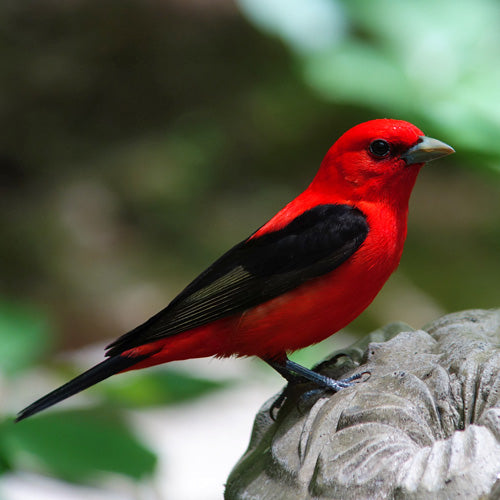
Some birds have two plumages, a basic plumage and an alternative plumage. This would include include tanagers, warblers and buntings. They will have a partial molt prior to breeding season to give the males their alternative plumage which is more colorful than their basic plumage. They must look their best to attract a mate. A good example of this is the Scarlet Tanager. The male is vibrant red with black wings and tail in the spring. After breeding season he molts, and his color changes to olive-yellow, similar to the female. Quite a noticeable difference!


Larger birds including blue jays, grackles and red-winged blackbirds may appear scruffy looking during their molts. It's interesting to watch them at the feeders and observe this feather change. You may also notice gaps in their feathers. I have noticed this over the last week, along with finding random feathers in the back yard, as well in the bird bath. While watching the red-winged blackbirds in the bird bath, I noticed them splashing about, then preening their feathers, and then continuing to bath.
When you're wondering why the birds seem to have disappeared, you are actually witnessing another part of bird behavior. Don't give up on your bird watching, they're just keeping a low profile. They will be back to ready themselves for the fall migration season.
Happy Birding!
Author - Jane Paradis