Please Don’t Ban the Bird Feeder!
Every once in a while, I get an interesting request from a fellow birder.
“Paul, our residents’ association is thinking about banning bird feeders. Could you give me a few thoughts I can share with them?”
Or perhaps it’s a municipality considering a broader wildlife-control policy that includes bird feeding.
I have to admit, these conversations always make me smile a little. After all, I’ve spent a good part of my life talking about birds, bird feeding and the simple pleasure of watching a chickadee, cardinal or goldfinch visit a feeder in the backyard.
And now I’m occasionally called upon to defend the humble bird feeder!
So, let me put on my Paul’s Perch hat and offer a few thoughts.
First, I completely understand why communities want sensible wildlife policies.
Nobody wants a backyard that becomes a buffet for raccoons, skunks, rats and every other neighbourhood creature looking for an easy meal. Nobody wants spilled food attracting unwanted wildlife, creating a mess or becoming a nuisance for neighbours.
And certainly, nobody is suggesting that people should throw handfuls of cheap birdseed onto the ground and hope for the best.
But there is a very big difference between irresponsible wildlife feeding and responsible wild bird feeding.

That distinction is important.
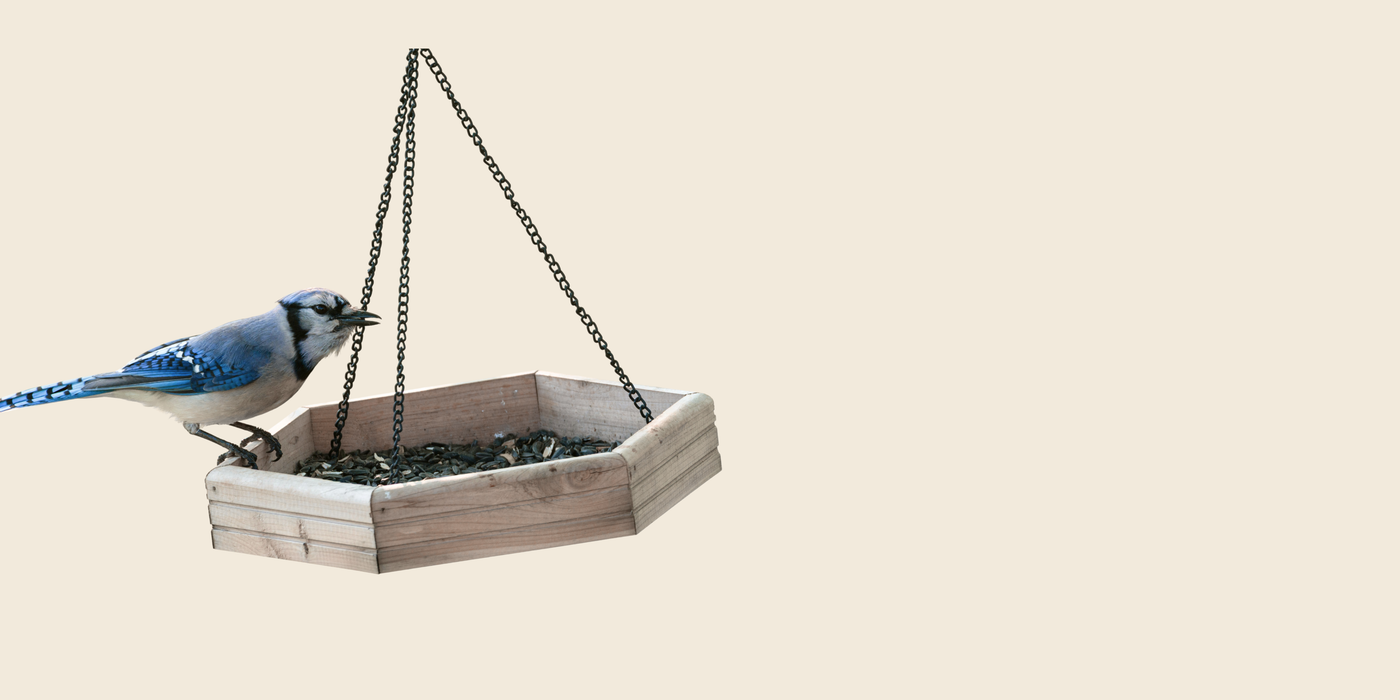
A properly installed, properly maintained bird feeder can be a clean, controlled and very enjoyable way to provide supplemental food for wild birds.
In fact, today's bird-feeding products and bird foods make responsible feeding easier than ever.
Take sunflower hearts, for example.
Because the shells have already been removed, birds can eat the food without leaving a carpet of sunflower shells underneath the feeder. Good-quality seed mixes also contain fewer of the inexpensive fillers that birds simply toss aside, which means less waste and less food ending up on the ground.
A responsible bird feeder owner can also take some very simple steps:
- Keep the feeders clean.
- Use good-quality food.
- Position feeders appropriately.
- Avoid excessive amounts of food.
- Clean up spilled seed.
- Keep an eye on what species are visiting.
And, if a particular feeder genuinely creates a problem, move it—or temporarily take it down. That seems pretty reasonable to me.

Birds Are Wildlife Too
There is another part of this discussion that I think sometimes gets overlooked.
When we talk about “wildlife management,” we often think about the animals that can create conflicts with humans. Raccoons. Skunks. Squirrels. Coyotes. Rodents.
But birds are wildlife too.
And, thankfully, most of us seem to like having them around.
They are part of the natural character of our communities. They bring colour, movement and, of course, a little music to our gardens.
But our birds are living in a world that we have dramatically changed.
We have built roads, subdivisions, shopping centres, industrial areas and parking lots. We have cleared forests and fragmented natural habitats. We have changed the landscape in ways that make finding food, shelter and nesting sites more challenging for many species.
So while birds are wonderfully adaptable, I think it is reasonable to ask whether we can give them a little helping hand.
I’m certainly not suggesting that a bird feeder replaces natural habitat. It doesn’t.
Planting native trees and shrubs, protecting natural areas and creating bird-friendly gardens are all critically important.
But responsible supplemental feeding can be one small part of a larger effort to support the birds that share our communities.
And there is another benefit that I think is sometimes underestimated.

Bird Feeders Create Bird Lovers
Put a bird feeder outside a kitchen window and something wonderful often happens. People start watching. They learn that the little grey bird visiting the feeder is a Black-capped Chickadee. They discover that the bright red bird is a male Northern Cardinal. They notice when the goldfinches arrive. They start wondering what that woodpecker is doing on the tree.
Then they start looking up the birds.
Maybe they buy a field guide.
Maybe they get a pair of binoculars.
Maybe they plant a native shrub.
Maybe they take their grandchildren outside to see the birds.
And suddenly, a bird feeder has become something much bigger than a bird feeder.
It has become a connection to nature. That matters.
If we want people to care about wildlife and the natural environment, I think we should encourage opportunities for people to experience wildlife—not unnecessarily remove them.

Regulate the Problem, Not the Hobby
This is where I think residents’ associations and municipalities can take a more balanced approach.
- If a feeder is creating a documented problem, deal with the problem.
- If someone is dumping large quantities of food onto the ground, establish reasonable rules.
- If a feeder is poorly maintained, require it to be cleaned.
- If a particular location is attracting unwanted wildlife, require the feeder to be moved.
Those are reasonable measures.
But a blanket prohibition on all bird feeding and all bird feeders treats the responsible bird feeder owner exactly the same as someone who is creating a genuine wildlife nuisance.
That doesn't seem particularly fair—or particularly necessary.
Imagine banning every barbecue because one person occasionally burns the burgers and fills the neighbourhood with smoke!
Okay, perhaps that isn't a perfect analogy. But you get my point.
The answer to irresponsible behaviour isn't always to prohibit the responsible behaviour of everyone else.
A better solution is to establish reasonable standards.
A Simple Responsible Bird Feeding Policy
If a community really wants to address the issue, why not create a “Responsible Bird Feeding” policy?
Something as simple as:
- Use properly designed bird feeders.
- Keep feeders clean and in good condition.
- Use appropriate, high-quality bird food.
- Minimize spilled and discarded seed.
- Don't intentionally place large quantities of food on the ground.
- Clean up accumulated seed and shells.
- Place feeders thoughtfully and respectfully.
- If a feeder demonstrably creates a nuisance or attracts unwanted wildlife, relocate or remove it.
That's it.
It provides residents with clear expectations while still allowing them to enjoy one of the simplest ways of connecting with nature.

A Little Common Sense Goes a Long Way
Over the years, I've had the privilege of meeting thousands of people who love birds.
Some are serious birders who can identify a bird flying overhead by its call.
Others simply enjoy looking out their kitchen window and seeing a cardinal.
Both are important.
You don't have to be an expert birder to appreciate wildlife.
And you don't have to turn your backyard into a nature preserve to make a positive difference.
Sometimes, it's just a feeder, some good seed and a few minutes watching the birds.
I also understand that every community is different. There may be legitimate local concerns that need to be addressed. A thoughtful wildlife policy should absolutely take those concerns seriously.
But I would encourage residents’ associations and municipalities to distinguish between wildlife management and wildlife exclusion.
Let's manage conflicts where they actually exist.
Let's educate residents about responsible feeding.
Let's encourage good practices.
And let's avoid taking away one of the easiest and most enjoyable ways people can connect with the natural world.
So, if you happen to be one of those birders who has been asked to help make the case for keeping bird feeders in your community, feel free to send this Paul’s Perch along.
And if your residents’ association or municipality is considering a wildlife policy, I would simply ask them to take another look before putting the “No Bird Feeders” sign up.
Because sometimes the best wildlife policy isn't “Don't feed the birds.”
Sometimes it's simply: “Let's learn how to do it responsibly.”
After all, our birds were here long before the subdivision, the shopping centre and the municipal bylaw.
Maybe we can find a little room for them—and the people who enjoy them—in all of our communities.
Keep looking up!
Paul Oliver
Founder, Urban Nature Store