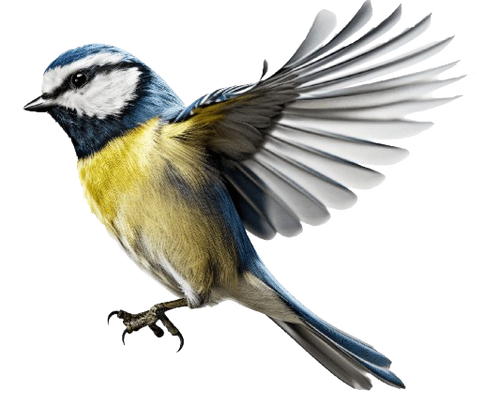
Many backyard birds can eat whole peanuts in the shell without any help, since species with strong enough bills can hammer, wedge, or crack a shell open right at the feeder or after carrying it away to a perch. Smaller or softer-billed birds, though, often can't manage a whole in-shell peanut and do better with shelled peanuts, peanut pieces, or a peanut-based suet instead.
Which Birds Can Open Peanuts in the Shell on Their Own?
Blue jays are the classic in-shell peanut specialist, since they'll grab a whole peanut, fly off, wedge it into bark, and hammer it open with repeated strikes, often caching several at once rather than eating on the spot. Woodpeckers use a similar wedge-and-hammer approach with their chisel-shaped bills, and nuthatches, which are already built for working bark with a strong, straight bill, manage whole peanuts the same way. Crows and grackles are large and strong-billed enough to crack a shell too, though they're less frequent visitors at a typical backyard feeder than jays and woodpeckers.
Which Birds Need Peanuts Already Shelled or Broken Up?
Chickadees can carry off a whole peanut and work at it over time, but they make faster use of shelled pieces small enough to swallow or cache without extra effort. Cardinals, finches, and other birds with smaller or seed-shaped bills generally can't open a tough peanut shell at all, so a whole in-shell peanut sitting in a tray feeder often just gets ignored by the species that cannot crack it. For these smaller or softer-billed visitors, shelled peanut pieces or a peanut-based suet, such as the Mill Creek Peanut Premium Suet Cake, priced under $7 CAD, or the Armstrong Peanut Select Suet Cake, work better than offering the shell-on version.
What's the Safest Way to Offer Whole Peanuts in the Shell?
Whole peanuts in the shell are safest offered fresh, dry, and free of mold, since mold on peanuts can produce aflatoxin, a toxin that's genuinely dangerous to birds and squirrels in even small amounts. Buying bird-grade peanuts sold specifically for feeding, storing them in a dry, sealed container, and checking a bag before refilling a feeder are the simplest ways to avoid that risk. A dedicated in-shell peanut feeder, which holds the pods behind wire mesh so birds work at them in place rather than carrying every one off, also cuts down on the mess and waste of peanuts dropped and left to go damp on the ground.
Where to Buy Whole Peanuts in the Shell
Urban Nature Store sells Whole Peanuts in the Shell starting at $12.95 CAD, in bag sizes up to 50 lb, along with an In-Shell Peanut Feeder built to hold them. Full sizing and pricing detail is covered in the store's guide to buying peanuts in the shell.
Frequently Asked Questions
Can squirrels eat whole peanuts in the shell too?
Yes. Squirrels handle whole in-shell peanuts easily with their teeth and are one of the main reasons in-shell peanuts are sold as both bird and squirrel food.
Do peanuts need to be unsalted and unroasted for birds?
Yes. Peanuts meant for birds should be raw or roasted without salt, oil, or seasoning, since added salt and flavourings aren't good for wild birds in the quantities a feeder can deliver.
Will moldy peanuts make birds sick?
Yes, potentially seriously. Mold on peanuts can produce aflatoxin, which is toxic to birds, so any peanuts that look damp, discoloured, or musty should be thrown out rather than put in a feeder.
Is peanut butter a safer alternative to whole peanuts?
It can be, for birds that struggle with whole peanuts, though plain, unsalted peanut butter is the right choice, and it's often blended into a suet cake rather than offered straight so it doesn't clump in a bird's throat or stick to feathers.
Do peanuts attract squirrels to a bird feeder?
Yes, often more than most other bird foods, so a feeder loaded with whole peanuts in the shell should be expected to draw squirrels as well as birds unless it's specifically squirrel-resistant.