Have you ever looked beneath your bird feeder and wondered why you're growing a garden of weeds instead of simply feeding the birds? If you're finding sunflower seedlings, grass-like sprouts or unwanted plants appearing beneath your feeder, you're not alone.
It's a common frustration for backyard bird enthusiasts. You fill your feeder with birdseed, enjoy watching the birds visit, and then discover that the discarded seed is sprouting throughout your lawn or garden.
The good news is that you can significantly reduce the problem by choosing better birdseed, using the right feeder and installing accessories that catch dropped food.
At Urban Nature Store, we believe feeding wild birds should be an enjoyable experience, not a constant battle with weeds, mess and wasted seed. Here's how to keep your feeding station cleaner while making the most of every bag of birdseed you buy.
Why Is Birdseed Growing Under My Feeder?
Birdseed sprouts when viable seeds fall onto suitable ground and receive the moisture and conditions needed for germination.
Rain, watering from your garden hose and warm weather can all help dropped seed germinate. Depending on the seed variety and growing conditions, you may soon find seedlings appearing beneath your feeder.
There are several reasons this happens:
- Birds drop seed while feeding. Birds naturally handle, select and sometimes discard individual seeds.
- Some feeders spill seed. Poorly designed feeders or dispensing mechanisms can release more seed than birds can consume.
- Low-quality seed mixes contain unwanted ingredients. Birds may reject certain seeds, leaving them scattered beneath the feeder.
- Wind and weather spread the mess. Seed and discarded material can accumulate across a wider area.
- Wet conditions encourage germination. Seed left on moist soil may sprout when temperatures and other conditions are favourable.
Although sprouting seed is generally not harmful to your lawn, unwanted plants can become unsightly and compete with surrounding grass or garden plants.
The most effective solution is to prevent unnecessary seeds from reaching the ground in the first place.
1. Switch to No-Mess Sunflower Hearts
One of the simplest ways to reduce the mess beneath your feeder is to switch to sunflower hearts, also called sunflower kernels, for feeders with larger feeding portals, and fine sunflower hearts, for nyjer or thistle feeders.
Unlike traditional black oil sunflower seeds, sunflower hearts have had their outer shells removed. Birds can eat the kernels directly without leaving piles of discarded sunflower hulls beneath the feeder.
This offers several important benefits.
Less mess beneath your feeder. Because the shells have been removed, sunflower hearts eliminate the accumulation of discarded sunflower hulls that can make patios, decks and garden beds untidy.
Less unnecessary waste. Birds can eat the kernel without having to crack open the shell. This makes sunflower hearts a convenient food choice for many familiar backyard songbirds.
Excellent versatility. Sunflower hearts attract a wide variety of birds, including cardinals, chickadees, finches, nuthatches, woodpeckers and other seed-eating species.
A cleaner feeding area. Without piles of shells beneath the feeder, routine cleanup becomes easier.
Sunflower hearts are particularly useful if your feeder hangs over a deck, patio, lawn or landscaped garden where you want to minimize the mess.
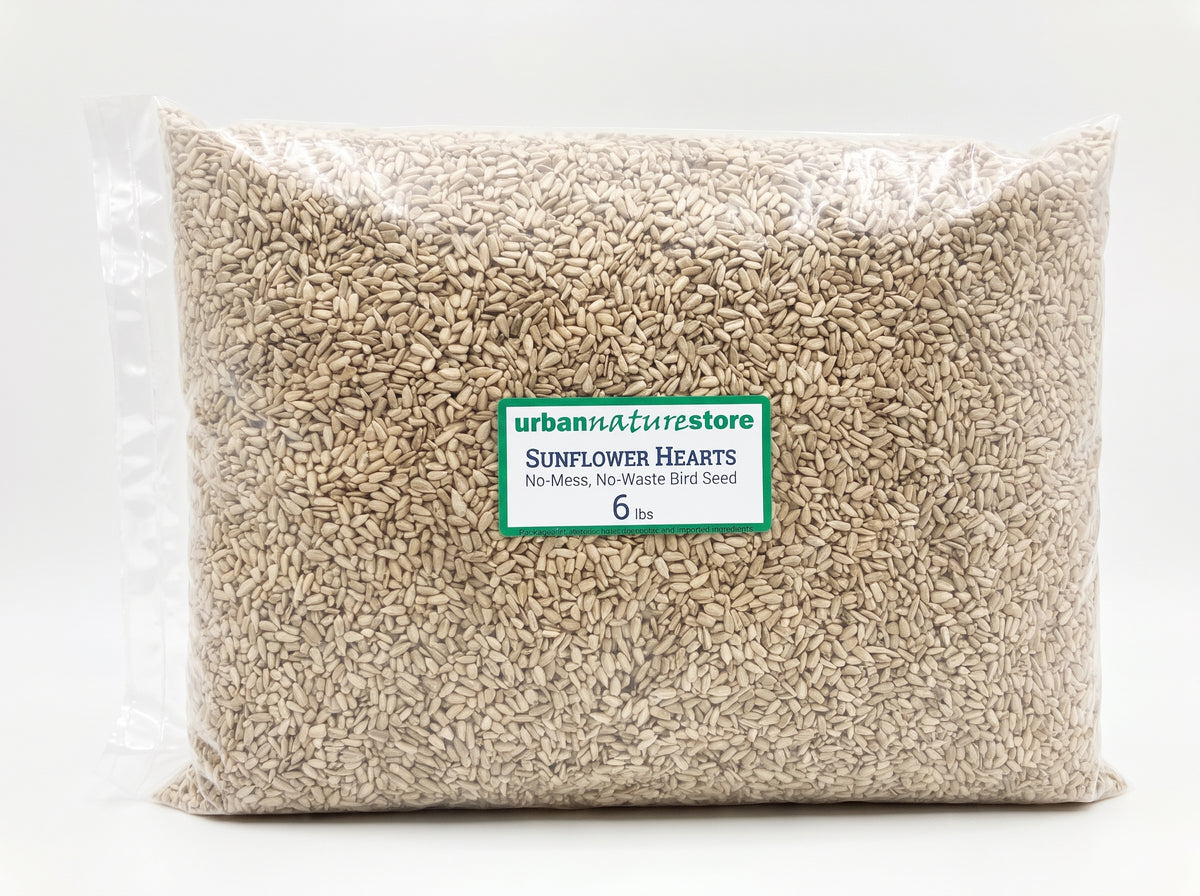
However, there is one important distinction: sunflower hearts reduce discarded shells, but they don't eliminate every dropped seed or prevent all sprouting. Birds can still drop pieces of food, and kernels that land on suitable soil may germinate.
For the cleanest possible feeding station, combine sunflower hearts with a suitable feeder and a seed-catching tray.
Explore sunflower hearts and other quality wild birdseed at UrbanNatureStore.ca.
2. Install a Seed Hoop to Catch Dropped Seed
If you want to keep the ground beneath your feeder clean, consider adding a seed-catching tray or seed hoop. Some manufacturers such as Aspects, Brome Bird Care, and Songbird Essentials offer seed-catching trays for their feeders. Songbird Essentials also offer seed hoops in three different sizes to accommodate the style of your feeder. The largest one is 30 inches and can be put on a pole to catch seeds from multiple feeders. These accessories fit beneath a compatible feeder and catch seed that would otherwise fall directly onto your lawn, patio or garden.

A seed hoop can help:
- Reduce the amount of seed reaching the ground.
- Keep patios and decks tidier.
- Reduce waste from accidental spills.
- Make it easier to collect uneaten seed.
- Limit the accumulation of food that may attract rodents and other unwanted visitors.
Seed-catching accessories are particularly useful beneath feeders that dispense seed through multiple feeding ports or attract large numbers of birds.
When selecting a seed hoop, check that it is compatible with your feeder and mounting system.
It's also important to clean the tray regularly. Seed and husks can accumulate on its surface, and damp, uneaten food should not be left to spoil.
A seed hoop is not a substitute for good feeder design, but it can be a valuable addition to a clean and efficient feeding station.
Urban Nature Store tip: If you're investing in a new feeder, consider the complete setup, including whether a compatible seed-catching tray can be added.
3. Choose a Feeder Designed to Reduce Seed Waste
Not all bird feeders handle seed in the same way.
Some feeders allow birds to reach into a large supply of seed, making it easy for them to select preferred pieces and toss less desirable ingredients aside. Other designs regulate access to the food more effectively.
Feeders that dispense seed through appropriately sized feeding ports can help reduce unnecessary spillage.
When choosing a feeder, look for a design that:
- Dispenses seed in controlled amounts.
- Provides convenient access without releasing excessive quantities.
- Allows birds to feed comfortably.
- It is easy to disassemble and clean.
- Works with the type of seed you intend to offer.
Some feeder designs limit how much seed birds can reach at one time, helping reduce the amount they scatter while feeding. Brome Bird Care's Tube Solution Feeders come in 3 different sizes and you can purchase a Tube Solution Tray to help keep your patio or lawn tidy.

However, no feeder can completely prevent birds from dropping food. Birds naturally handle and discard seeds, and different species have different feeding behaviours.
For many backyard birders, the best results come from pairing a well-designed feeder with sunflower hearts and a compatible seed-catching accessory.
Explore the bird feeder selection at UrbanNatureStore.ca to find a model suited to your backyard and preferred birdseed.
4. Avoid Low-Quality Birdseed Mixes Full of Fillers
One of the most overlooked causes of birdseed waste is the quality of the seed itself.
Inexpensive mixed birdseed can contain substantial quantities of ingredients that many common backyard songbirds are less interested in eating.
Depending on the mix, these may include wheat, milo and other grains that attract fewer of the birds you're hoping to see.
What happens next?
Birds pick through the mixture, select their preferred seeds and toss the rest aside. The rejected ingredients accumulate beneath the feeder, creating both a mess and an opportunity for unwanted plants to grow.
You may think you're saving money by purchasing the cheapest bag available, but if much of its contents ends up on the ground, you're not getting the value you expected.
Instead, consider choosing seed based on the birds you want to attract.
Sunflower hearts are an excellent option for attracting a broad range of familiar backyard songbirds while eliminating discarded sunflower shells.
Black oil sunflower seed is another popular choice, although its shells will accumulate beneath the feeder unless caught by a tray or otherwise managed.
The key is to select quality seed that birds will readily consume, rather than paying for ingredients that are likely to be rejected.
At Urban Nature Store, we encourage customers to consider the quality and suitability of their birdseed, not simply the price printed on the bag.
5. Clean Beneath Your Feeder Regularly
Even with quality sunflower hearts and a well-designed feeder, some food will inevitably reach the ground.
Regular cleanup helps prevent dropped seed from accumulating and sprouting.
Here are a few simple habits that make a difference:
Sweep patios and decks. Remove dropped seed and food fragments before they collect in corners or between deck boards.
Rake beneath feeders. On lawns and garden beds, periodically remove accumulated seed and debris.
Empty seed trays. Check your seed hoop or tray frequently and remove wet, spoiled or uneaten food.
Inspect after heavy rain. Moist conditions can make spilled seed more likely to spoil or germinate.
Clean the feeder itself. Remove old seed, husks and debris from feeding ports according to the manufacturer's instructions.
If seedlings have already appeared, remove them before they become established. Avoid leaving large quantities of spilled seed beneath the feeder while waiting for the next scheduled cleanup.
6. Position Your Feeder to Make Cleanup Easier
Feeder placement can also influence how easy it is to manage seed waste.
If possible, position your feeder over a surface that is easy to sweep or maintain.
For example, a feeder above a patio may be easier to clean than one suspended over a dense flower bed. However, you should still consider the needs and safety of the birds when selecting a location.
Provide birds with nearby protective cover while avoiding locations where cats can easily ambush them.
If your feeder must be positioned over a lawn or garden, a compatible seed hoop or seed tray can help catch dropped food before it reaches the ground.
Think about maintenance when planning your feeding station. A well-positioned feeder that is easy to access and clean will encourage you to keep up with routine care.
Enjoy More Birds and Less Mess with Urban Nature Store
Bird feeding should be about enjoying nature, not spending your weekends pulling unwanted seedlings from beneath your feeder.
By switching to no-mess sunflower hearts, choosing quality birdseed, installing a seed-catching hoop or seed tray, and selecting a feeder designed to reduce waste, you can make your backyard feeding station cleaner and more efficient.
Remember that sunflower hearts eliminate discarded shells, not every dropped kernel. Combining them with the right feeder and regular cleanup provides a more complete solution.
Ready to reduce the mess beneath your bird feeder?
Visit UrbanNatureStore.ca to explore our selection of sunflower hearts, quality wild birdseed, bird feeders and feeding accessories.
You can also visit one of our Urban Nature Store locations and speak with our team for help choosing the right products for your backyard.
Less mess. Less wasted seed. More time enjoying the birds. That's a better way to feed your feathered friends.
Related Reading
For more ways to keep your bird-feeding area clean, explore our Are There Bird Feeders That Won't Make a Mess Under a Feeding Station?, What Is the Best No-Mess Birdseed for a Backyard, Deck or Patio?, and Sunflower Hearts vs. Black Oil Sunflower Seeds: Why No Mess, No Waste Makes All the Difference!.