A small cedar structure hangs from a branch, and a bird lands on its ledge. It looks like a birdhouse. But if there is seed inside, it is a bird feeder. That distinction matters because nesting birds and feeding birds are looking for entirely different things.
A birdhouse offers an enclosed place to raise young, usually for species that naturally nest in cavities. A bird feeder offers food and may draw a wider variety of visitors, including birds that would never use a nest box. For many Canadian backyards, the best answer is a thoughtful mix of the two, supported by native plants, water and shelter.

A house-shaped seed feeder attracts birds for food, not nesting.
Birdhouse vs. bird feeder: the main difference
A birdhouse, also called a nest box, has an entrance hole leading to a protected nesting cavity. Its dimensions, ventilation, drainage and location matter to the species it is meant to support. A feeder has an accessible food supply, usually with a tray, ports or suet cage. Even if its roof and walls resemble a tiny cottage, it is not a nesting site.
A feeder can bring birds to your yard in any season when food is available. A nest box is used chiefly during breeding, and occupancy is never guaranteed. Some species may inspect a box without nesting, while others may prefer natural cavities nearby.
Which birds use birdhouses?
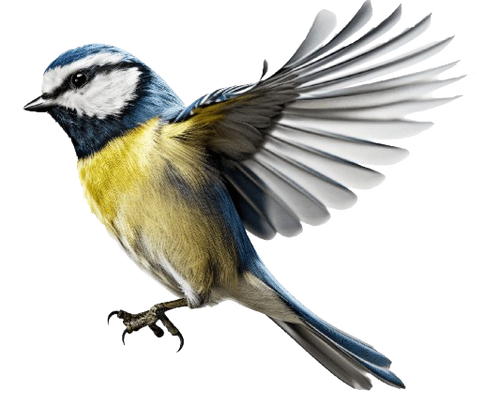
In much of Ontario and southern Canada, familiar cavity-nesting birds include House Wrens, Black-capped Chickadees, Tree Swallows and Eastern Bluebirds. They do not all need the same nest box. A small hole suited to a wren is not the right choice for a bluebird, and open lawns or fields are more suitable for bluebirds and Tree Swallows than a heavily shaded courtyard.
Choose the box for the bird you hope to support, then think about habitat before hanging it. It should be sturdy, well drained, ventilated and accessible for cleaning and monitoring. Avoid decorative boxes with tiny air spaces, exposed perches or construction that cannot be inspected safely.
For a small cavity-nesting setup, the Audubon Cedar Wren/Chickadee House has a 1⅛-inch entrance and provides cleaning access, drainage and ventilation. It is a better fit for small cavity nesters than a general decorative birdhouse.

Audubon Cedar Wren/Chickadee House.
For open areas where these species breed, the Bluebird and Tree Swallow House is another option. This locally made wooden nest box is intended for bluebirds and Tree Swallows. Install and monitor it using species-specific guidance rather than treating it as a one-location-fits-all product.

Bluebird and Tree Swallow House.
Material also affects upkeep. Cedar and other untreated woods are familiar choices, but recycled plastic designs can be practical when their ventilation and drainage are appropriate. The opening size and safe placement are still more important than the colour or decoration.
The Recycled Plastic Wren House has a hinged roof, a 1⅛-inch entrance and built-in drainage and ventilation, offering an alternative to wooden construction for small cavity-nesting birds.

Recycled Plastic Wren House.

Purple Martins at a multi-compartment nesting structure. These birds use a different housing style from small wren and chickadee boxes.
Which birds are more likely to visit feeders?
Seed and suet feeders can draw Northern Cardinals, American Goldfinches, Black-capped Chickadees, nuthatches, woodpeckers and other visitors. Their preferences depend on the food and feeder design. Cardinals favour stable perches and platform-like surfaces. Goldfinches use small-seed feeders. Woodpeckers and nuthatches readily cling to suet holders.
Those same birds do not necessarily want a nest box. Northern Cardinals build open cup nests in dense shrubs, and American Goldfinches make nests among branches and vegetation. A birdhouse will not persuade them to switch to a cavity. Keeping native shrubs and suitable nesting vegetation can be more helpful than installing more boxes.
A covered hopper feeder such as the Canadian Junior Chalet Feeder is designed to hold seed. Its roof keeps much of the rain off and the metal screen bottom helps drainage. Although it resembles a small house, its purpose is to feed visiting birds.

Canadian Junior Chalet Feeder.
For a broader food selection, the Hopper Feeder With Suet Cages holds both seed and suet. That allows seed-eating birds and suet-eating visitors to use one station, provided it is kept clean and the food remains fresh.

Hopper Feeder With Suet Cages.
Some birds use both
Black-capped Chickadees provide a familiar example. They can use appropriately sized nest boxes in suitable habitat and also visit sunflower seed and suet feeders. A Downy Woodpecker may visit suet and may use an appropriate cavity or nest box, though it also excavates natural nesting cavities. Bluebirds may take mealworms from a feeding station while nesting in a suitable box.
Food does not automatically mean nesting. Putting a feeder next to a nest box is not required and may bring unwanted traffic close to the entrance. Keep the nesting area calm, limit disturbance and avoid turning it into a busy feeding spot.
How to decide what your backyard needs
Choose a birdhouse if you have suitable breeding habitat
A nest box makes sense when the target species is present, the yard matches its habitat and you can install and maintain the box correctly. For example, a yard beside an open meadow may be more promising for Tree Swallows than a densely built street. A sheltered garden with mature vegetation may be better suited to a wren box.
Choose a feeder if you want to watch birds visiting regularly
A well-placed feeder is often the easier starting point for someone who wants close-up sightings. Match the seed to the visiting species, keep the food dry, clean the feeder routinely and prevent heavy buildup of hulls and droppings underneath.
Choose both if you can maintain them responsibly
In a larger garden, a feeder near a viewing window and a nest box in a quieter section can work well. Place feeders to reduce window-collision risk, ideally within one metre of glass or more than nine metres away, and make large windows visible to birds with effective exterior treatments. Keep cats indoors or otherwise separated from bird habitat.
Do not forget plants, water and natural shelter
Native shrubs, seed-bearing flowers, insects, leaf litter and safe water supply may support more species than another decorative structure. Birds that never use houses or feeders still need places to forage, escape predators and build their own nests.
A quick bird-by-bird guide
- Black-capped Chickadee: suitable small nest box and sunflower seed or suet feeder.
- House Wren: suitable small nest box, but rarely a regular seed-feeder visitor.
- Tree Swallow: nest box in suitable open habitat, primarily catches flying insects.
- Eastern Bluebird: suitable nest box, may take mealworms at a feeder.
- Northern Cardinal: platform or hopper feeder, nests in shrubs rather than enclosed boxes.
- American Goldfinch: Nyjer or sunflower feeder, nests in vegetation rather than enclosed boxes.
- Downy Woodpecker: suet feeder and natural cavities, may use an appropriate nest box.
Common mistakes to avoid
The most common mistake is buying a birdhouse for the way it looks and assuming any bird will move in. Other problems include mounting a box where predators can reach it easily, using the wrong entrance size, adding nesting materials without species-specific guidance and failing to clean out or monitor the box appropriately. With feeders, the biggest risks are spoiled food, unclean surfaces, window collisions and attracting unwanted animals through spillage.
Frequently asked questions
Will a bird feeder encourage birds to nest in my birdhouse?
It can make the yard more familiar to visiting birds, but there is no guarantee. Nest-site suitability, habitat, entrance size and safety matter much more than a nearby feeder.
Can I put a birdhouse and feeder on the same pole?
It is usually better to keep them separate. Heavy feeder traffic can disturb nesting birds, and different placement needs make one shared pole an awkward compromise.
Why is my birdhouse empty?
The target species may not be present, the box may be in unsuitable habitat, or the location may be too exposed or disturbed. Check species-specific dimensions and placement rather than moving the box repeatedly during breeding season.
Do cardinals use birdhouses?
No. Northern Cardinals build open cup nests in shrubs and small trees. Provide dense vegetation and, if you want to feed them, a stable platform or hopper feeder with suitable seed.
Build a backyard birds can use
A birdhouse is a nesting tool. A feeder is a food source. Both can be useful, but neither replaces the natural habitat birds depend on. Choose the products that suit the species already living near you, make the yard safe, and maintain the equipment once it is installed.